No visit schedule can guarantee that water damage will be prevented. Risk is reduced by understanding the property's water and drainage systems, following insurer requirements, monitoring agreed reference points and shortening the time between a visible warning and qualified intervention.
Start with the insurance contract and the actual installation
Some insurance contracts contain prevention requirements for an unoccupied main or second home, particularly around water, heating and long absences. The owner should ask the insurer what applies to this exact property. A villa with irrigation, pool equipment, an external plant room and several water heaters cannot be managed through a generic instruction copied from an apartment checklist.
Create a water map before there is a leak
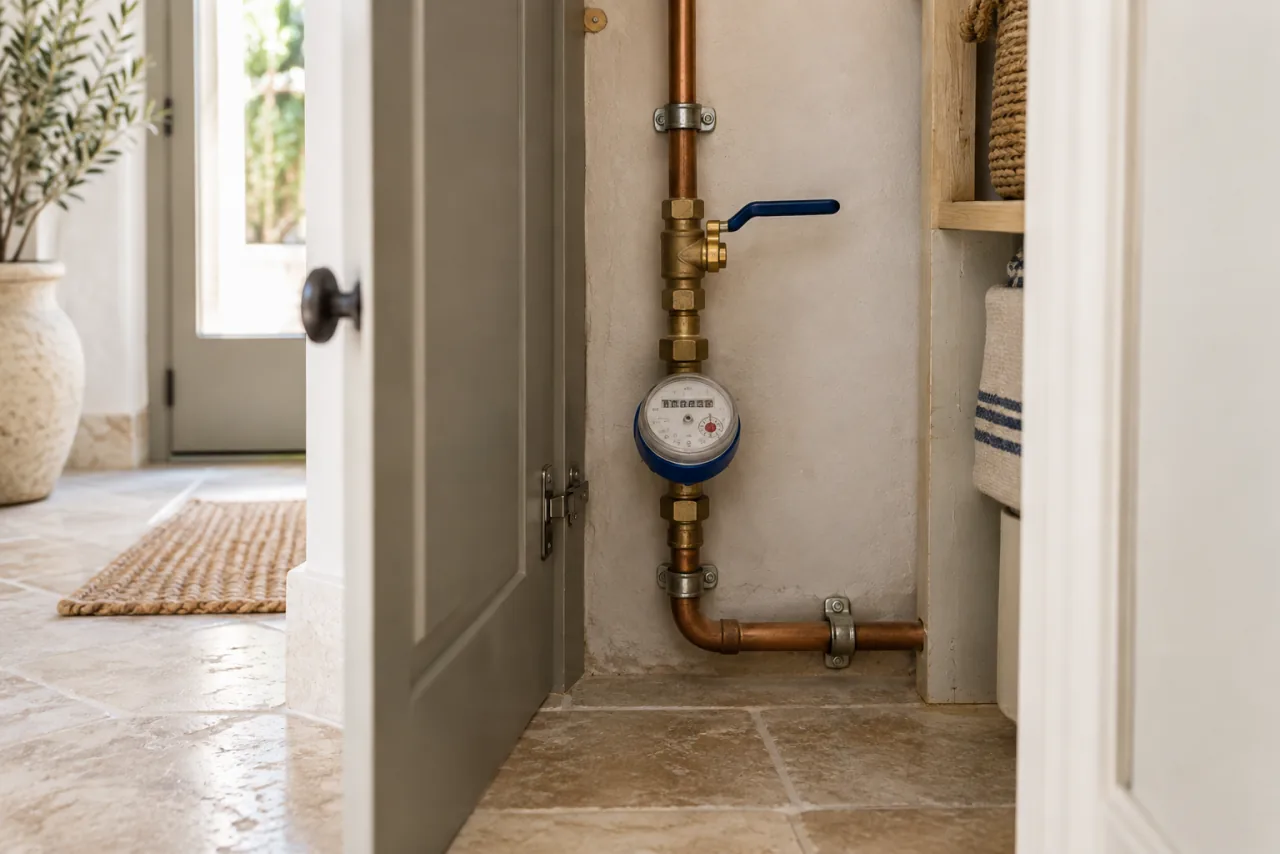
The property handbook should identify the main shut-off, relevant secondary valves, meters, water heaters, pumps, irrigation controls, pool plant and known drainage routes. This information must be kept securely and verified by a qualified professional where necessary. The purpose is to avoid searching for a valve while water is already moving through the building.
Use consistent visible reference points
Checks may include meter readings where meaningful, visible pipe connections, ceilings below bathrooms, under-sink areas included in scope, plant rooms, humidity-prone rooms and signs of ingress near doors or terraces. A stable photograph from the same position can reveal change more clearly than dozens of unrelated images.
Treat the exterior as part of water prevention
Mediterranean rain can be intense and rapid. Blocked drains, terraces, gutters, retaining areas and low points can direct water towards the building even when the internal plumbing is sound. Météo-France warns that intense rain can create runoff and sudden flooding; post-event checks should follow official safety guidance and never require unsafe travel or entry into a flooded basement.
Add technology carefully
Leak sensors, connected valves and power alerts may shorten detection time, but they need connectivity, batteries, testing and a named response. An alert without a person who understands the property can simply move the uncertainty onto a phone screen. Technology should support the agreed response plan, not replace it.
Respond without destroying evidence
If active water is found, immediate safety and isolation follow the property's instructions and professional advice. Record the location, time, visible extent and protective action. Notify the owner, insurer or building manager as required and engage the appropriate specialist. Avoid permanent repair or disposal decisions that could conflict with insurer instructions unless urgent safety makes action necessary.
Common questions
Should the main water supply be closed whenever a villa is empty?
Not automatically. Pool, irrigation, heating and other systems may depend on water, and insurance requirements vary. The owner should agree a property-specific decision with the insurer and qualified professionals.
Can connected leak sensors replace property visits?
They can provide useful early warnings but depend on power, connectivity, maintenance and a response plan. They do not observe storm damage, drainage problems or conditions outside the sensor's location.
What should a first water-damage report contain?
Visible facts, exact location, time, photographs, active risks, protective action taken, people notified and the next professional response. It should avoid an unqualified diagnosis.
Every property is different. The appropriate checks and technical decisions should reflect the home, the owner's instructions, insurance requirements and qualified professional advice.
Sources and useful official references
External facts and legal or safety boundaries were checked against the following sources. Emilie's operational method remains specific to the service described on this site.